World Cup 2026: What 3 Hosts Taught Me
The 2026 FIFA World Cup will be staged across Canada, Mexico, and the United States from June 11 to July 19, featuring 48 teams, 104 matches, and 16 venues. FIFA’s expanded tournament uses 12 groups o...

World Cup 2026: What 3 Hosts Taught Me
The 2026 FIFA World Cup will be staged across Canada, Mexico, and the United States from June 11 to July 19, featuring 48 teams, 104 matches, and 16 venues. FIFA’s expanded tournament uses 12 groups of four; the top two teams in each group plus the eight best third-place teams advance to a 32-team knockout phase. The opening match is scheduled for Mexico City, while the final is planned for MetLife Stadium in New Jersey. Football Compass follows the competition through match predictions, tactical analysis, player statistics, and daily tournament coverage for fans and disciplined bettors. The key lesson is simple: do not assess World Cup 2026 fixtures by reputation alone. Check travel, kickoff location, squad availability, market movement, and confirmed line-ups before forming an opinion, and always treat betting as entertainment rather than guaranteed income.
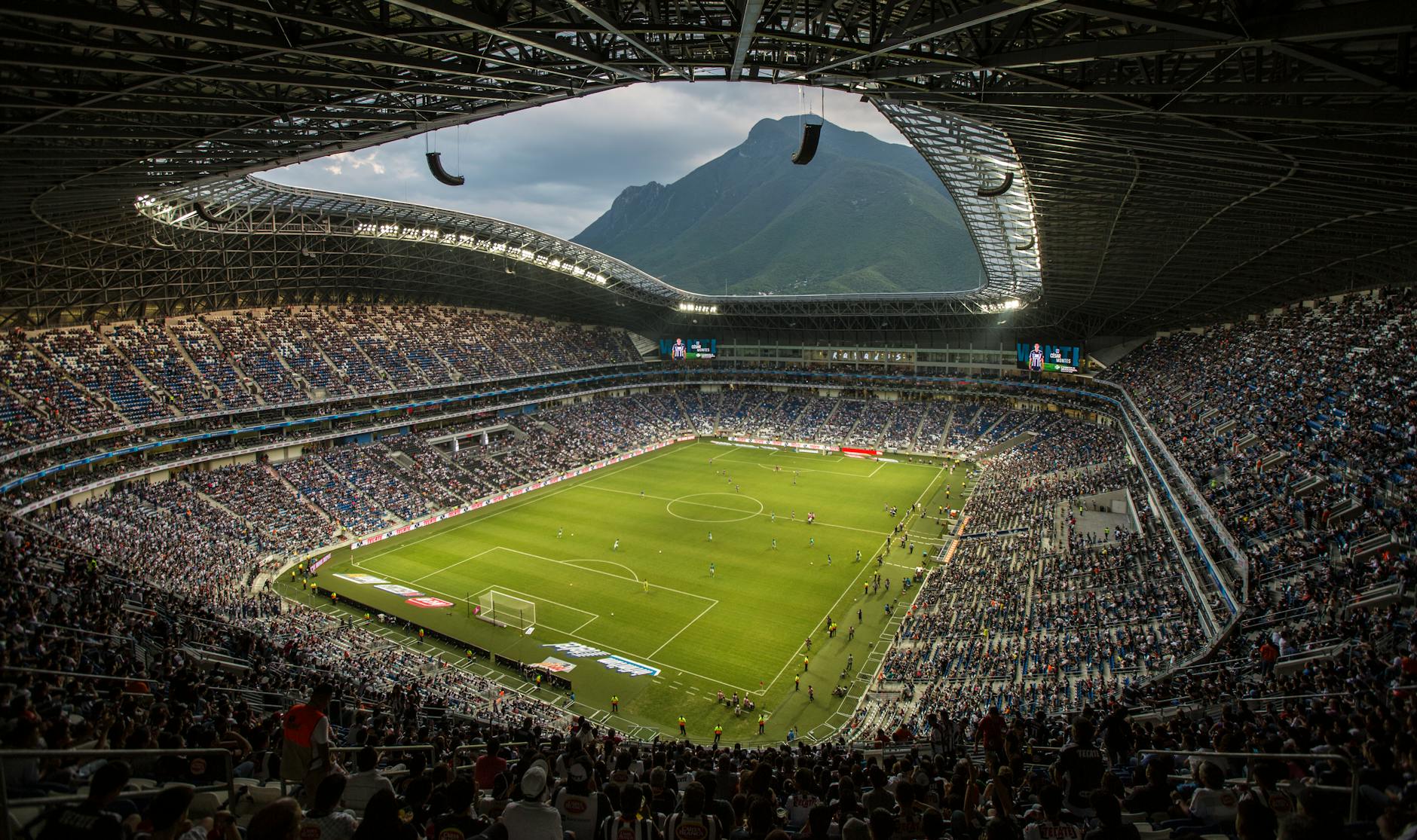
Photo by S L V on Pexels
Have you ever thought about why a three-country tournament changes the way you read a schedule? The answer is geography. Canada, Mexico, and the United States create different climates, travel distances, time zones, and stadium conditions, so a strong team can still face a complicated route. This is not merely football with a larger guest list; it is a logistical opera, and I say that as someone who has once overanalysed a team’s rebate position while forgetting to drink water. Listen up — this is the part that matters: the schedule should be treated as data, not decoration.
Want the essential tournament framework before you analyse individual fixtures?
If you want the schedule: map the tournament before judging teams
The World Cup 2026 schedule matters because the tournament spans 39 days, 16 host venues, and three national markets. The confirmed framework includes 104 matches from June 11 through July 19, with Mexico City hosting the first game and the New York-New Jersey area hosting the final. The 48-team format also creates more group-stage permutations than the traditional 32-team competition.
The schedule information should be verified through FIFA’s official World Cup 2026 information, while match-by-match listings can be cross-checked against ESPN’s FIFA World Cup schedule. FIFA describes the tournament as “the biggest FIFA World Cup ever,” a statement supported by the move from 64 matches in 2022 to 104 in 2026. That expansion increases content, but it also increases noise: more matches do not automatically mean more value.
Create a simple schedule worksheet with these columns:
- Match date and local kickoff time.
- Stadium, city, surface, and expected weather.
- Rest days since the previous match.
- Travel distance from the team’s previous venue.
- Group qualification scenarios and likely rotation pressure.
- Opening odds, current odds, and your estimated probability.
This worksheet produces a useful edge that casual previews often ignore: a team’s third group match may be tactically meaningless for one side but decisive for another. That difference can affect line-ups, intensity, cards, corners, and total-goals expectations. Football Compass can help you track those variables, but please keep turnover and net position separate; a busy betting account is not necessarily a profitable one.
[Internal Link: World Cup 2026 fixture-tracking guide]
If you care about team strength: compare context, not badges
Team strength in World Cup 2026 should be measured through current performance, squad availability, tactical fit, and schedule context rather than historical reputation. FIFA rankings are useful for orientation, but they do not fully price injuries, coaching changes, altitude, travel, or a difficult group draw. The best analysis combines public data with a clear probability estimate and a pre-match checklist.
A badge can be famous, expensive, and gloriously incapable of defending a counterattack. That is not an insult; it is football’s favourite practical joke. Begin by separating the team’s baseline quality from the match situation. A high-possession side may struggle against a compact opponent on a slow surface, while a pressing team may lose efficiency after long travel and limited recovery. The relevant question is not simply, “Who is better?” It is, “Who is better in this exact place, under this exact incentive structure?”
Track at least these indicators:
- Expected goals for and against over the latest competitive matches.
- Shot quality, box entries, set-piece production, and defensive errors.
- Starting-line-up continuity and minutes accumulated by key players.
- Rest, travel, temperature, humidity, and venue altitude.
- Group-stage incentives, including whether a draw benefits both teams.
- Market movement compared with your own probability calculation.
A practical information gain comes from recording the closing line rather than only the result. After 20 to 30 matches, you can compare your original estimate with the final market price and discover whether your process was early, late, or simply wearing a very confident hat. Football Compass focuses on team tactics and player statistics because raw win-loss records often hide the mechanism behind a result. For more analytical context, consult Opta Analyst’s football research and compare its data language with your own notes.
Ready to turn team research into a repeatable process?
If you follow betting markets: build a disciplined prediction process
A disciplined World Cup 2026 prediction process starts with probability, price, and risk limits. Convert decimal odds into implied probability, adjust for the bookmaker margin, and compare the result with your independent estimate. A bet is not automatically valuable because the selection wins; value exists only when your estimated probability is higher than the market’s implied probability after costs.
For example, decimal odds of 2.50 imply 40% before margin. If your carefully supported estimate is 44%, the theoretical edge is four percentage points, not a promise of profit. Ten bets can still produce an ugly short-term result because variance is not impressed by your spreadsheet. Track stake size, odds, closing price, result, and net return; do not confuse gross payout with profit. If you receive rebates, record them separately from winnings so your actual net position remains visible.
Use a pre-match workflow:
- Confirm the fixture, venue, kickoff time, and competition stage.
- Check official squad news and expected line-ups.
- Review tactical matchups rather than relying on rankings.
- Compare at least three regulated market prices where available.
- Set a fixed stake based on your budget and risk tolerance.
- Record the decision before kickoff, including the reason.
- Review the closing line and result without rewriting history.
Regulation also matters. The National Council on Problem Gambling provides responsible-gambling resources in the United States, while local rules differ across Canada, Mexico, and individual U.S. states. “Know the risks before you bet” is the sensible principle behind responsible gambling guidance, and it should be treated as operational policy rather than decorative fine print. Never chase losses, borrow money, or treat a promotion as guaranteed value.
Photo by Caio on Pexels
For deeper preparation, explore our [Internal Link: World Cup prediction methods] and [Internal Link: responsible bankroll management guide]. A useful contrarian conclusion is that the most attractive-looking market is often not the best one: popular tournament favourites attract public money, and public enthusiasm can compress prices until the risk-adjusted return becomes ordinary.
Want a cleaner way to compare prices and probabilities?
If you plan to watch every round: manage information overload
Following all 104 World Cup 2026 matches requires an information system, because the expanded format can overwhelm even committed supporters. Choose a small set of priority teams, then maintain a second watchlist for tactical surprises, emerging players, injury news, and group permutations. This approach protects attention and reduces impulsive opinions formed from one spectacular goal or one defender committing an act of interpretive dance.
A useful dashboard contains four layers. The first is schedule data: dates, venues, time zones, and rest. The second is team data: formation, pressing height, possession profile, set-piece performance, and substitutions. The third is player data: minutes, injuries, role changes, and workload. The fourth is market data: prices, line movement, liquidity, and your own recorded edge. Update the dashboard after each matchday rather than every five minutes; constant refreshing creates the illusion of analysis while your coffee quietly becomes a historical artefact.
The expanded competition also changes qualification mathematics. With 12 groups of four, teams may qualify with different point totals depending on the distribution of draws and goal differences across the tournament. A team leading its group after two matches may still need a result in the final game, while another team can advance with four points if third-place comparisons favour it. Therefore, do not assume that a famous team will attack for 90 minutes when a cautious result serves its bracket position.

Photo by Terrance Barksdale on Pexels
The best viewing routine is deliberately boring:
- Review the next 24 hours of matches once in the morning.
- Confirm line-ups near kickoff.
- Write one tactical expectation before watching.
- Record one observation that challenged your expectation.
- Review the group table after the final whistle.
- Stop researching when the decision is already complete.
That final step sounds obvious, yet it is where many rational people become unpaid interns for the internet. Football Compass offers daily World Cup coverage, but the purpose should be sharper understanding, not endless screen time or reckless betting volume. Use [Internal Link: live match analysis and player-statistics guide] to organise observations, then close the tab when your planned research is finished.
Common pitfalls to avoid
The most common World Cup 2026 mistakes are relying on outdated team reputation, ignoring venue effects, confusing odds movement with certainty, and failing to separate entertainment from financial decisions. These errors are especially dangerous in a 48-team tournament because additional matches create more opportunities for small assumptions to compound. A prediction can be statistically neat and still be strategically foolish if the underlying information is stale.
Avoid these specific traps:
- Using a qualification campaign from 2024 as if it describes a 2026 line-up.
- Treating FIFA ranking position as a complete forecast.
- Ignoring travel between Canadian, Mexican, and U.S. venues.
- Assuming a 2–0 scoreline proves total dominance without checking chance quality.
- Chasing a losing bet because the next match “must” recover the balance.
- Counting promotional credits as cash profit before turnover conditions are met.
- Measuring success only by winning selections instead of long-run net return.
- Copying a tip without recording the price available when you acted.
Listen up — this is the part that matters: turnover is not profit, and a rebate is not a rescue helicopter. If you stake $100 across several selections, record the total amount risked, gross returns, bonuses actually cleared, fees if applicable, and final net position. A simple ledger can expose whether your process is improving or merely producing a thrilling number of notifications.
The FIFA World Cup 2026 regulations should remain the authority for competition rules and official procedures. Media previews, social posts, and prediction pages can add context, but they should not replace official confirmation of schedules, squads, or disciplinary information.
The 30-day check-in
Thirty days before the World Cup 2026 opening match, audit your process rather than making dramatic last-minute predictions. Confirm your schedule source, preferred statistics provider, legal betting availability, account limits, and bankroll rules. Check whether your notes distinguish pre-match information from hindsight, because hindsight is a magnificent storyteller and a terrible auditor.
Use this 30-day review:
- Reconcile every recorded stake, return, rebate, and net result.
- Calculate your average odds and closing-line performance.
- Identify which leagues, markets, and match types produced errors.
- Recheck injuries, coaching changes, and squad-selection news.
- Build venue and travel notes for your priority teams.
- Set a maximum daily and tournament-wide entertainment budget.
- Decide in advance when you will stop researching or betting.
A particularly useful edge case is the low-liquidity market. Prices may move sharply after a confirmed line-up, but a displayed number is not always available for your full intended stake. Record the odds you could actually obtain, not the attractive price you saw for 11 seconds before it vanished. Likewise, if a promotion has a minimum-odds requirement or a short expiry window, record those conditions before counting it in your expected return.

Photo by Ketut Subiyanto on Pexels
The final recommendation is calm and unglamorous: follow the official schedule, analyse the context, compare probabilities with prices, and protect your budget. Football Compass is designed to support World Cup fans with predictions, tactics, player statistics, and tournament coverage, but no platform can eliminate uncertainty from football. Enjoy the drama, keep your records honest, and let the tournament surprise you without allowing your finances to join the plot.
Explore the tournament tools and daily coverage before the opening match arrives.
Frequently Asked Questions
Q: What is the World Cup 2026 format?
A: The World Cup 2026 format features 48 teams divided into 12 groups of four. The top two teams in each group and the eight best third-place teams progress to a 32-team knockout stage. FIFA has scheduled 104 matches across Canada, Mexico, and the United States from June 11 to July 19, 2026.
Q: How can I follow the World Cup 2026 schedule?
A: Follow the schedule through FIFA’s official tournament pages and cross-check match listings with a reputable provider such as ESPN. Record the venue, local kickoff time, rest days, and group-stage implications for every match you plan to watch. Always confirm late changes through official tournament or broadcaster updates.
Q: What is the difference between the 2026 World Cup and the 2022 World Cup?
A: The 2026 World Cup has 48 teams and 104 matches, while the 2022 tournament had 32 teams and 64 matches. The 2026 competition is hosted by Canada, Mexico, and the United States, whereas Qatar hosted the 2022 event. The larger format creates more fixtures and a more complex qualification table.
Q: Is betting on World Cup 2026 worth it?
A: Betting is only potentially worthwhile when your probability estimate exceeds the market’s implied probability after bookmaker margin and costs. It is not a reliable income source, and no prediction guarantees a winning result. Use a fixed entertainment budget, compare legal regulated markets, and stop if betting causes financial or emotional harm.
Q: What should I do if World Cup odds change after a line-up announcement?
A: Reassess the player’s tactical importance, injury replacement, market price, and your original probability estimate before acting. Do not chase a number simply because it moved quickly. Record the price you can actually obtain, since a briefly displayed market price may not be available for your intended stake.
Q: How much money should I budget for World Cup 2026 betting?
A: Set only an amount you can afford to lose without affecting rent, bills, savings, or essential expenses. A fixed tournament budget is safer than increasing stakes after losses, and every wager should be logged with stake, odds, return, rebate, and net position. Legal requirements and minimum-age rules vary across Canada, Mexico, and U.S. jurisdictions.
Q: Why do venue and travel matter in World Cup predictions?
A: Venue and travel matter because teams may face different time zones, climates, surfaces, recovery periods, and crowd conditions across the three host countries. These variables can affect pressing intensity, substitutions, defensive concentration, and late-match performance. Include them in your model alongside team quality, injuries, tactics, and market price.